Water Damage Restoration in New York
Phase 3 now connects this state hub to 8 dedicated city pages. Each city guide is written around restoration scope, cost drivers and local conditions without inventing city-specific contractor prices.
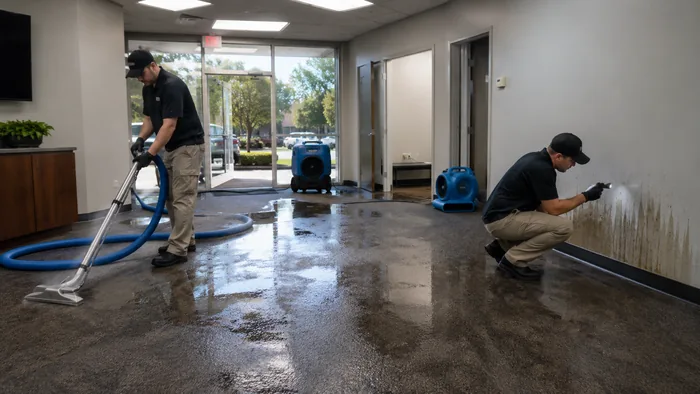
New York city guides
New York City, NY
Dense multifamily buildings, aging plumbing, roof leaks, appliance failures and stormwater can make source tracing and access unusually complex.
Open city guide →Buffalo, NY
Frozen pipes, snowmelt, winter plumbing failures, roof leaks and basement water can drive emergency restoration during colder months.
Open city guide →Rochester, NY
Frozen pipes, snowmelt, plumbing failures and basement seepage can create seasonal water-damage and drying needs.
Open city guide →Yonkers, NY
Multi-unit plumbing, basement water, roof leaks and winter freeze events can create both localized and multi-floor restoration work.
Open city guide →Syracuse, NY
Snow, freeze-thaw cycles, burst pipes and basement water are recurring restoration concerns alongside ordinary plumbing and appliance losses.
Open city guide →Albany, NY
Winter pipe failures, snowmelt, plumbing leaks and basement moisture can create extraction and structural-drying projects.
Open city guide →White Plains, NY
Plumbing failures, roof leaks, basement water and winter freeze events can affect both single-family and multifamily properties.
Open city guide →New Rochelle, NY
Coastal storms, basement water, plumbing failures and older building systems can create complex mitigation and repair scopes.
Open city guide →How Phase 3 handles local SEO
The city pages are not clones with the place name swapped. Each page has city-specific loss context, a local restoration explanation, 12 FAQs, current national cost context, service links and a direct calculator CTA. Phase 4 will add separate city-by-service pages only where the search intent is distinct enough to justify another URL.
State-level cost context
Current 2026 national restoration data reports many projects between $1,383–$6,371, with an average near $3,867. Those figures are benchmarks only. A New York property can fall below or above them based on contamination, affected area, materials, drying time, demolition and reconstruction.
Estimate your New York water damage before comparing contractors
Use the main Water Damage Calculator to organize square footage, affected materials, water category and elapsed time into a planning estimate.
Calculate My Water Damage Cost →Deep local service expansion
Only these markets currently have indexable city-by-service clusters. Other cities remain consolidated until enough unique local evidence exists.
Frequently asked questions
Which New York cities have dedicated restoration guides?
This hub links to the priority Phase 3 cities currently published beneath the state.
Are the New York city pages using city-specific prices?
No. They use current national benchmark data and city-specific restoration context without inventing local contractor prices.
Will more New York city pages be added?
Yes. Later expansion should be driven by search data, commercial intent and content quality rather than publishing every municipality automatically.
Why are city-by-service pages not all live yet?
Phase 4 is reserved for distinct commercial intents such as sewage cleanup, extraction and emergency restoration in the strongest city markets.
Does location affect water restoration cost?
Yes, but physical scope remains the primary driver. Labor, access and local operating conditions are secondary to contamination, affected materials and repair requirements.
Should every city use the same restoration contractor?
No. Provider selection is local and should consider qualifications, scope, response capability and applicable licensing or insurance requirements.
Can I use the national calculator for a local loss?
Yes. The calculator organizes scope variables that matter regardless of city.
Does insurance coverage change by city?
Policy terms, state law and circumstances can matter, but this site does not determine coverage or claim payment.