Water Backup Endorsement
This guide explains what a water-backup endorsement is intended to address and why it is not the same as flood insurance without pretending that a restoration website can rewrite your policy.
What should happen first?
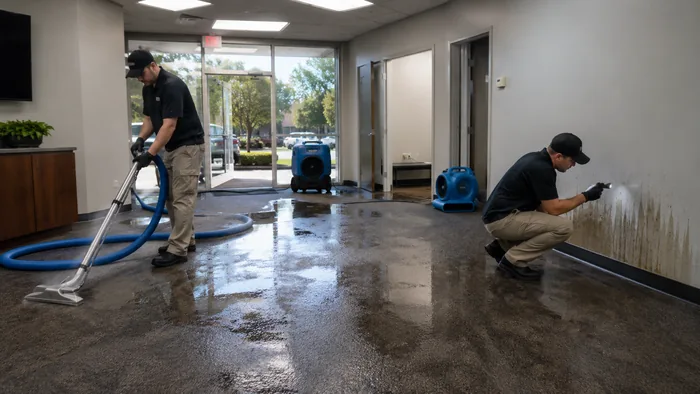
Protect people and the property first. If it is safe, stop the source, prevent additional damage, photograph the condition and notify the insurer. Emergency mitigation can be necessary before every detail of the claim is known, but the work should be documented carefully. California's consumer claims guide, for example, tells policyholders to protect property from further damage, save receipts and avoid extensive permanent repairs until the loss has been assessed. Florida similarly advises policyholders to contact the insurer, take photos, make temporary repairs and save receipts.
How should you compare restoration scope with the insurance claim?
| Question | Restoration side | Insurance side |
|---|---|---|
| What happened? | Source, water category, rooms and materials affected | Cause of loss and policy terms |
| What work is needed? | Extraction, drying, demolition, cleaning, repairs | Which items are accepted as covered scope |
| What does it cost? | Contractor pricing and quantities | Carrier estimate, valuation, deductible and settlement rules |
| What if damage is hidden? | Document newly discovered moisture or materials | Submit added documentation and request scope review |
Why do estimates differ?
Differences are not automatically evidence that one side is wrong. The contractor may include full reconstruction while the insurer has only scoped mitigation, or one estimate may include different quantities, materials, labor assumptions or depreciation. Normalize the scopes line by line before comparing totals. If one estimate includes replacement of flooring and another assumes drying in place, the totals answer different questions.
What documents are worth keeping?
- Photos and video before demolition or cleanup when safe.
- Source and discovery-time notes.
- Contractor scopes and itemized estimates.
- Moisture maps, readings and drying logs.
- Receipts for temporary protection and emergency work.
- Damaged-content inventory and proof of ownership when relevant.
- Emails, letters and claim communications.
- Written explanations for denials, exclusions or scope changes.
How does flood change the insurance question?
Most homeowners insurance does not cover flood damage. FEMA's NFIP guidance treats flood claims as a separate process, with its own documentation, adjuster review and appeal procedures. That means the route by which water entered the property matters. Rising exterior water, a broken supply line and sewer backup should not be lumped together as one generic "water damage" claim.
What should you do if the claim amount and contractor scope do not match?
Ask both sides to show their work. Compare measurements, quantities, material grade, demolition assumptions, drying days and reconstruction. Identify the specific line items that differ. Then provide supporting photos, invoices, estimates or other records. For NFIP claims, FEMA's checklist says policyholders should review the adjuster's estimate carefully and can request additional payment if damage was missed or repair cost exceeds the estimate.
Estimate the physical restoration scope first
Use the main calculator to organize the property damage before comparing it with contractor and insurer estimates.
Open Water Damage Calculator →Official sources
New York Department of Financial Services
Official or regulator source used for claim-process and coverage context.
Open official source →Florida Department of Financial Services
Official or regulator source used for claim-process and coverage context.
Open official source →Frequently asked questions
What is the first thing to understand about water backup endorsement?
Separate restoration scope from insurance coverage. A contractor estimates the work required at the property; the insurer applies the policy and claim rules.
Should I document the loss before cleanup?
When it is safe, photographs, video, source information, inventories, contractor estimates, receipts and drying records can help explain the condition and work performed.
Can I make emergency repairs before the adjuster arrives?
Reasonable temporary work may be appropriate to prevent further damage, but permanent reconstruction should be coordinated with the claim process and documented.
Does the contractor estimate control the claim payment?
No. A contractor estimate is evidence of proposed repair scope and price, not a coverage determination.
Why might the insurer estimate and contractor estimate differ?
They may use different measurements, material assumptions, labor rates, demolition scope, depreciation, repair methods or included line items.
What if hidden damage is discovered later?
Document the newly discovered condition and ask the contractor and insurer how the additional scope should be handled.
Does flood damage follow the same rules as ordinary homeowners water damage?
Usually not. Most homeowners policies do not cover flood damage, so rising exterior water is commonly handled under separate flood coverage.
What role does the deductible play?
The deductible is generally the portion of a covered loss the policyholder is responsible for before insurer payment, subject to policy terms.
What if I disagree with the claim decision?
Ask for the decision and scope in writing, identify the specific disputed items, provide supporting documentation and use the insurer, state regulator or FEMA appeal process that applies.
Should I hire a public adjuster?
That is a case-specific decision. If considering one, verify licensing, fees, contract terms and cancellation rights in your state.
Can this page tell me whether my exact claim is covered?
No. Coverage depends on the actual policy, cause of loss and facts. This page explains process and comparison points, not a binding policy interpretation.
Can the Water Damage Calculator tell me the final insurance payout?
No. It can help organize restoration scope and planning cost, but the insurer determines coverage and claim payment.