Sewage Cleanup Cost
Sewage cleanup cost is driven by contaminated-water handling, affected porous materials, cleaning, removal, disposal and the size of the impacted area.
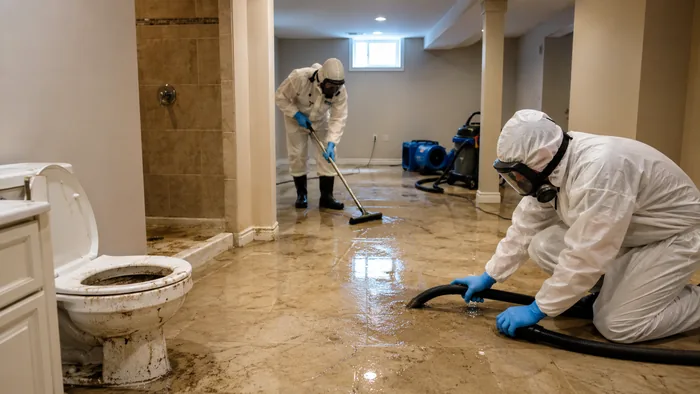
What does sewage cleanup cost include?
A useful estimate separates the job into stages. For this search intent, the likely scope includes containment, PPE, extraction, removal, decontamination, disposal and drying. A quote that omits one stage may look cheaper simply because the contractor is pricing less work.
| Estimate section | What to verify | Why it changes cost |
|---|---|---|
| Emergency response | Dispatch, source control and immediate protection | After-hours or urgent mobilization may be priced separately. |
| Water removal | Standing-water extraction and access | Volume, depth, contamination and access change labor/equipment. |
| Drying | Equipment count, monitoring and expected days | Wet assemblies can require extended dehumidification and air movement. |
| Removal | Which materials are assumed unsalvageable | Demolition adds labor, disposal and later replacement. |
| Cleaning | Whether contamination changes cleaning procedures | Contaminated losses can require additional safety and disposal controls. |
| Reconstruction | Drywall, flooring, insulation, trim, cabinets and paint | Finish restoration can become a major portion of the total project. |
How should you calculate sewage cleanup cost?
Measure the affected area
Estimate the square footage and list every room or assembly touched by water. Include adjacent spaces if water traveled through walls, ceilings or flooring.
Identify the source and category
A clean supply-line leak is not the same scope as sewage, exterior floodwater or water that has picked up contaminants.
List wet materials
Drywall, insulation, carpet, hardwood, cabinets and subfloor require different drying and replacement decisions.
Separate mitigation from repairs
Extraction and drying stop the loss. Reconstruction restores finishes. Compare them as separate cost stages before looking at the total.
What do 2026 national water-damage benchmarks tell you?
HomeAdvisor's June 2026 cost data reports a normal water-damage-restoration range of $1,383–$6,371, an average around about $3,867, and a broader reported span of roughly $450–$16,000. It also reports category-dependent restoration figures around about $3.50–$7.50 per affected square foot. Those numbers are useful context, not a promise that this specific job will land inside the range.
The square-foot figure is especially easy to misuse. Two 500-square-foot losses can have radically different scopes if one involves a limited clean-water event and the other involves contaminated water, saturated insulation, hardwood and cabinet removal. Use square footage as one input, not the entire estimate.
How do you compare two quotes for sewage cleanup cost?
Normalize the quotes before comparing totals. Ask whether each contractor is pricing the same affected area, the same amount of demolition, the same drying duration and the same reconstruction. If one estimate includes full repairs and another stops after mitigation, the totals are not competing prices for the same job.
- Confirm the affected square footage and rooms.
- Confirm the water source/category assumed.
- Ask which materials are being removed versus dried.
- Ask how many equipment days are included.
- Separate cleaning/decontamination from basic extraction when relevant.
- Identify whether the price includes reconstruction and finish work.
- Ask how change orders are handled if hidden damage is found.
When can the final price move beyond the initial estimate?
Hidden moisture is the obvious reason. Once flooring, baseboards, cabinets or wall finishes are opened, contractors may find wet subfloor, insulation or cavities that were not visible during the first walkthrough. The correct response is not to pretend this never happens. It is to require documentation of the added scope and understand how the new work changes the estimate.
Turn this cost guide into a property-specific estimate
National benchmarks are useful for context, but your affected area, water category, materials and elapsed time determine whether the job resembles a minor mitigation project or a much larger restoration.
Calculate My Sewage Cleanup Cost →Related commercial guides
Black Water Cleanup Cost
Read guide →Gray Water Cleanup Cost
Read guide →Flooded Basement Cleanup Cost
Read guide →Water Damage Restoration Services
Read guide →Frequently asked questions
How much does sewage cleanup cost?
The safest answer is a range, not a single number. Current 2026 national water-restoration data reports many projects between $1,383–$6,371, but sewage cleanup cost can fall outside that band when contamination, demolition or repairs are substantial.
What is usually included in sewage cleanup cost?
Typical scope can include containment, PPE, extraction, removal, decontamination, disposal and drying. Always verify whether the estimate covers mitigation only or also reconstruction.
What makes sewage cleanup cost increase?
Larger affected areas, contaminated water, difficult access, longer saturation, more porous materials, hidden moisture and broader reconstruction can all increase the final scope.
Can I estimate sewage cleanup cost before a contractor arrives?
Yes, as a planning range. Record the affected square footage, rooms, material types, source/category and time elapsed, then use the calculator. Treat the result as a benchmark until an on-site inspection confirms the scope.
Can a national cost range predict my exact bill?
No. National data is a benchmark. The actual bill depends on the affected area, contamination, materials, access, drying requirements, demolition and repairs.
Why do two contractors quote very different amounts?
They may be assuming different affected areas, salvageability, equipment duration, demolition scope, repair scope or contamination controls. Compare line items, not only the total.
Is mitigation the same as reconstruction?
No. Mitigation limits and removes water damage; reconstruction restores removed or damaged finishes and building materials after drying.
Does insurance determine the contractor price?
No. Contractors price work, while insurers determine coverage and claim payment under the policy. Those are related but separate decisions.
Should I choose the cheapest quote?
Not automatically. Compare what is included, the drying plan, demolition assumptions, documentation, licensing where required and whether reconstruction is included.
Can hidden moisture increase the final cost?
Yes. Moisture behind walls, under flooring or inside insulation can expand drying or removal scope after inspection.
Does contaminated water change the job?
It can. Contaminated losses may require additional PPE, containment, removal, cleaning and disposal procedures.
Why does elapsed time matter?
Longer exposure gives water more opportunity to migrate into porous materials and hidden assemblies, potentially increasing the restoration scope.
Cost benchmark source: HomeAdvisor water damage restoration cost data, updated June 17, 2026. Specialized benchmark pages may cite additional 2026 Angi data above.