Water Damage Restoration in Houma, LA
Houma property owners can face water losses shaped by hurricanes, tropical rain, high humidity and frequent drainage stress. Building access also matters because elevated homes, slab-on-grade houses and properties exposed to storms and flooding can hide moisture in very different ways.
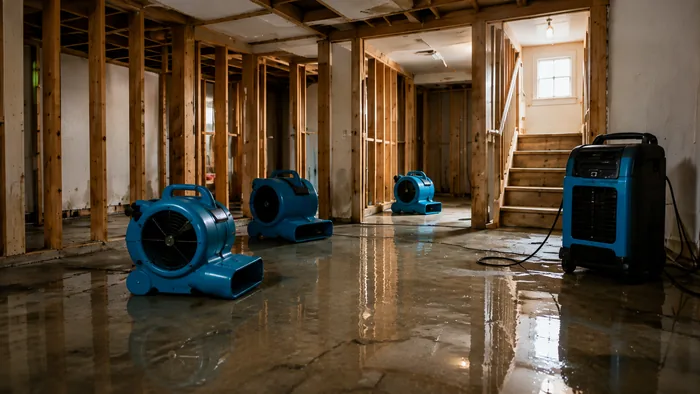
Local restoration context in Houma
Louisiana conditions can include hurricanes, tropical rain, high humidity and frequent drainage stress. Property types such as elevated homes, slab-on-grade houses and properties exposed to storms and flooding can affect how easily a contractor can inspect floors, walls, ceilings and concealed cavities.
Common loss categories worth separating include exterior flooding, wind-driven rain, sewage backups, roof damage and persistent moisture. Those are planning categories, not fabricated city-level frequency statistics.
Check adjacent rooms
Shared walls, continuous flooring and hidden plumbing routes can allow moisture to cross room boundaries. The room where the leak was found is not always the only room that needs inspection.
Use measurements, not touch
A surface can feel dry while deeper material remains wet. Moisture readings, reference areas and trend measurements are more reliable than appearance alone when deciding whether equipment can be removed.
Think in layers
Flooring may cover underlayment and subfloor; walls may contain insulation and framing; cabinets can trap moisture behind toe kicks. A local estimate should make clear which layers were actually evaluated.
Distinguish odor from cause
Odor can come from wet material, contamination or affected contents. Masking it is not remediation. The source should be identified before deodorizing becomes the focus.
Review quantities line by line
Differences in square footage, linear footage, equipment counts or demolition quantities often explain estimate gaps. Comparing quantities is more useful than arguing about the total alone.
Separate emergency work from rebuild work
Stopping the source and stabilizing the structure can be urgent. Choosing finish materials, repainting and replacing trim are usually later decisions. Treating those phases separately makes contractor comparisons far clearer.
Check continuity of finishes
A small damaged area can create a larger repair question when flooring or finishes run continuously into adjacent rooms. This is a reconstruction issue, not necessarily a reason to overstate the original wet area.
Do not let urgency decide the entire project
Immediate mitigation can be necessary, but that does not mean the same company must automatically perform every repair. Homeowners can stabilize first and compare reconstruction options later.
Check access before assuming scope
Two losses with the same square footage can require very different labor if one is open and accessible while the other is behind cabinets, under glued flooring or inside a tight crawlspace. Access can change demolition and drying strategy materially.
Review the condition at project end
Before work begins, ask what 'complete' means: dry materials, cleaned surfaces, debris removal, reconstruction, or some combination. Different providers may stop at different points.
Three loss scenarios to think through in Houma
Persistent moisture
When a loss begins with persistent moisture, the first task is to confirm the source and map how far moisture moved. The repair decision then depends on contamination, material type, access and elapsed time. The same source can create a minor job in one property and a much larger project in another.
Wind-driven rain
When a loss begins with wind-driven rain, the first task is to confirm the source and map how far moisture moved. The repair decision then depends on contamination, material type, access and elapsed time. The same source can create a minor job in one property and a much larger project in another.
Sewage backups
When a loss begins with sewage backups, the first task is to confirm the source and map how far moisture moved. The repair decision then depends on contamination, material type, access and elapsed time. The same source can create a minor job in one property and a much larger project in another.
How to compare two Houma restoration estimates
| Item | What to compare | Why it matters |
|---|---|---|
| Rooms and surfaces | Exact areas included | Different boundaries create different totals. |
| Materials | Dry in place vs remove | Material decisions change mitigation and rebuild scope. |
| Equipment | Type, count and estimated days | Drying plans should be comparable. |
| Cleaning | Standard cleaning vs contaminated-loss procedures | Source and contamination change the work. |
| Reconstruction | Included or excluded | A mitigation-only quote is not a full repair quote. |
| Documentation | Photos, moisture logs and change orders | Written records make scope changes easier to verify. |
What this page deliberately does not invent
There is no reliable reason to publish a made-up “average Houma price” or a fictional list of local providers just to make a page look more specific. Where no dependable city-level data exists, this guide focuses on the real decision variables that change scope and cost.
Estimate the physical scope before comparing quotes
Use Water Damage Calculator to organize rooms, materials and loss type before you compare contractor proposals.
Calculate Water Damage →Additional questions before you hire
How to handle hidden-damage discoveries
Hidden damage does not automatically mean every proposed change is justified. Ask what was discovered, where it was located, how it was documented and why it changes the original scope. Specific evidence is more useful than a generic statement that 'more damage was found.'
Why room-by-room documentation matters
Room-by-room notes make it easier to compare scope because they show which surfaces, materials and tasks belong to each area. A single lump-sum description can hide differences in square footage, demolition and repair assumptions.
Frequently asked questions
Why is monitoring important?
It shows whether moisture levels are actually improving and helps determine when equipment can be removed.
What should I do first after discovering water damage?
Prioritize safety, stop the source if it is safe to do so, document the condition and then determine whether extraction, drying or emergency stabilization is needed.
Can the final scope grow after work starts?
Yes. Hidden wet materials can be discovered after baseboards, flooring or wall finishes are removed.
How long does structural drying take?
There is no single duration. Material type, moisture level, humidity, access and equipment performance all matter.
Why should I ask where the scope ends?
Because one estimate may stop at dry structure while another includes the final repairs.
Is water extraction the same as restoration?
No. Extraction removes standing water. Restoration may also include drying, demolition, cleaning and reconstruction.
Why can two local estimates differ so much?
They may include different rooms, materials, equipment days, demolition assumptions, cleaning or reconstruction.
Is exterior flooding the same as a plumbing leak for insurance?
Usually not. Flood losses are generally treated as a separate insurance question from many interior water losses.
Can I open windows to help drying?
Sometimes, but not always. If outdoor air is humid, it can slow drying instead of helping.
What records should I keep?
Photos, videos, estimates, invoices, moisture logs, drying records and written change orders are useful records.
Can a small leak affect the room below?
Yes. Water can migrate by gravity through floors, ceilings and wall cavities.
What does 'mitigation' mean?
It means taking steps to limit additional damage, such as source control, extraction, drying and selective removal.